Inner Development with the Inner Development Goals (IDGs)
Cultivating inner strength, awareness, and connection
Making the world better,
one pause at a time.
Change begins within.
Inner capacities are not a luxury—they are the foundation for change, relationships, and a livable future.
Inner work means encountering yourself anew, again and again.
Sensing what lives within you—and staying awake to what wants to emerge.
All my offerings—Empathic Communication,
Feedback Culture, Coaching—are rooted in this attitude.
Because change begins where we come into real contact—with ourselves and with others.
I want to stand by the river in my finest dress. I want to sing, strong and hard, and stomp my feet with a hundred others so that the waters hum with our happiness. I want to dance for the renewal of the world.
Robin Wall Kimmerer
My conviction that inner development is the foundation for a livable future, and my knowledge of the Inner Development Goals (IDG), flow into all my work. Because everything is interconnected.
This attitude is reflected in my offerings:
- Nonviolent Communication and empathy are part of inner work and strengthen being and relationships, among other things.
- Feedback competencies demonstrate openness and willingness to learn as well as courage. They are essential for building trust.
- Coaching supports inner clarity and is therefore also inner development.

This is the connection between my 'traditional' offerings
and the IDGs—the thread that binds them together.
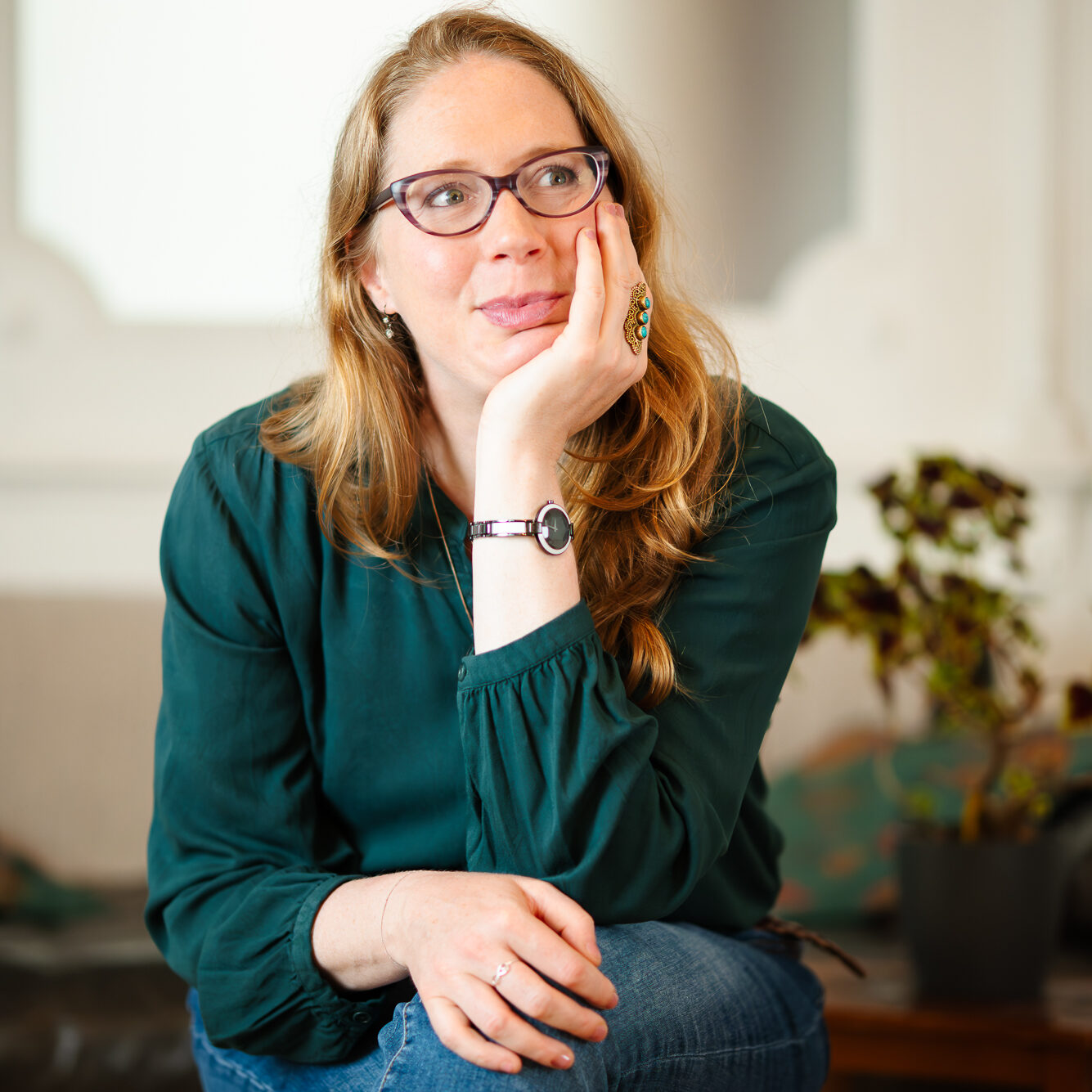
I am an IDG Ambassador
(Kilimanjaro Cohort)
Since participating in the IDG Ambassador Program on the Swedish island of Ekskäret, I have been carrying the idea forward.
I start where inner work becomes tangible—scientifically grounded in the IDG framework—and at the same time alive in practice.
Inner work also means living change yourself.
I do this through empathy circles and thanksgiving, among other things.
Empathy Circles "How are you really?"
An empathy circle is a safe space where you can share how you're really doing—and listen to others.
An empathy circle creates connection beyond small talk—in genuine presence.
An empathy circle has a structured process.
An empathy circle is a contribution to counteracting loneliness, a health risk of our modern world.
"Make no mistake—connection is not just a nice idea. It is fundamental."
(WHO report From Loneliness to Social Connection, 2025)
We gift each other time and attention, listen without judgment, and share what moves us.
This creates an experiential space where even strangers can feel connected—through compassion, presence, and humanity.
Process: Welcome - Empathy circle in small groups - Closing round
If you'd like to learn more about the initiative "How are you really?", which inspired this format, you can find more information here.
Haudenosaunee Thanksgiving Address
I begin the shared day with a reading of the Haudenosaunee Thanksgiving Address—also known as Words That Come Before All Else (example here).
This ancient gratitude ritual comes from the Haudenosaunee ("People of the Longhouse"), a confederacy of North American Indigenous nations. Their Thanksgiving Address is traditionally spoken to open gatherings, celebrations, or the beginning of the day. It reminds us that our lives are inseparably connected to all living things: Earth, water, wind, plants, all animals, the celestial bodies, and the generations before us.
Speaking this thanksgiving is for me a form of pausing—a conscious yes to life, to interconnection, and to community.
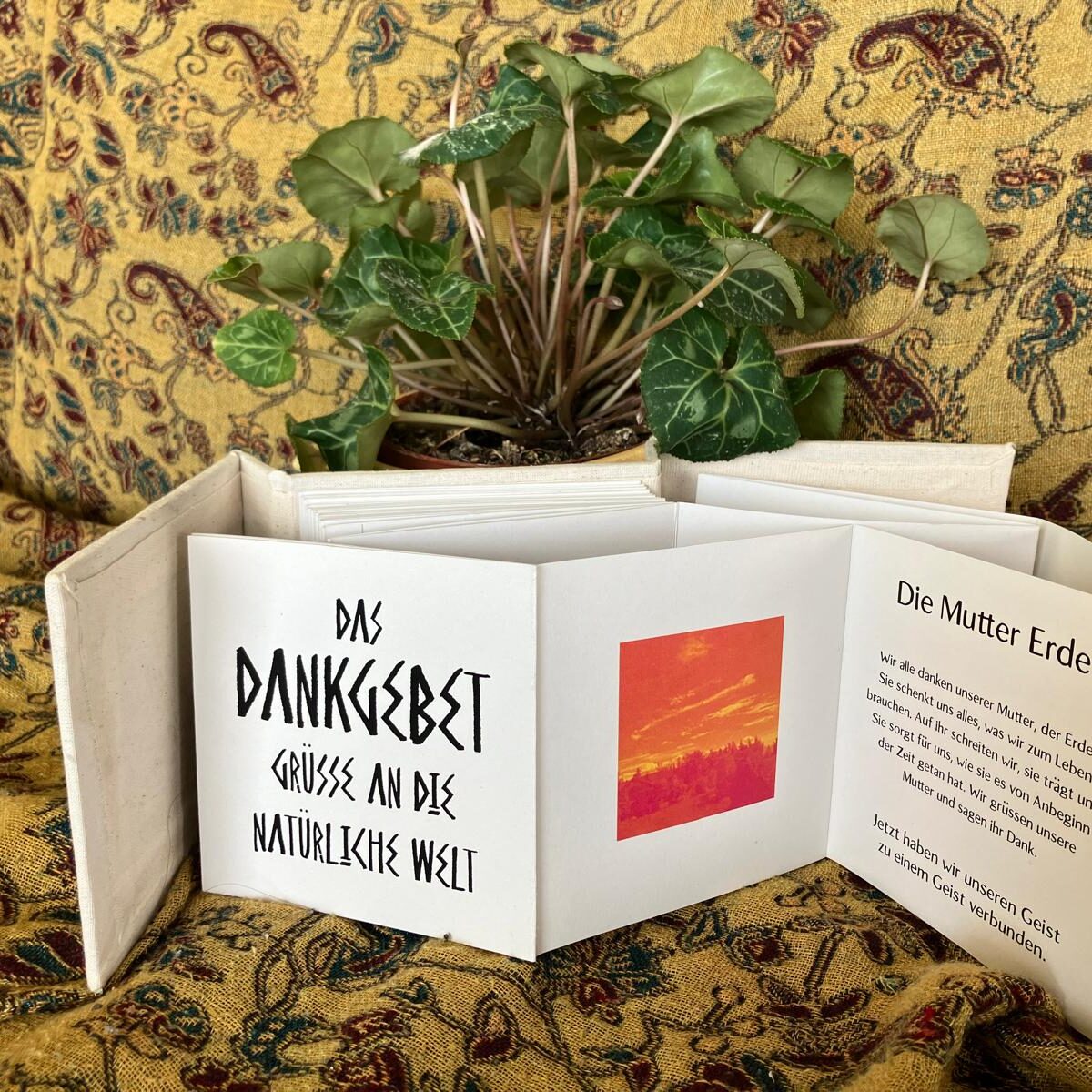
This practice inspired my friend, artist Marion Désauté, to create a leporello booklet and gift it to me—a poetic bridge between word and art. If you'd like to have such a booklet, you can order one here.

About me – Nonviolent Communication and empathic leadership
In 2013, my journey began with Nonviolent Communication (NVC). As a newly separated mother of a three-year-old son, I read the book "Cessez d'être gentil, soyez vrai!" (Stop Being Nice, Be Real!) by Thomas d'Ansembourg while on vacation in southern France.
I became aware that there was a gap between what I read and what I lived—especially in my post-separation relationship, in the different parenting approaches between my father and me, and in my relationship with myself and my son.
This moment was the catalyst for my path into empathic communication.